The Top Headwear Brands in America, Ranked by People Who Actually Make Hats
Before anything else: DungeonForward is on this list. We publish this blog and we have been making headwear since 2008, so this is not a neutral survey. It is our opinion, written by people who spend their week on crown heights, panel construction and stitch counts. Read it that way, and disagree with us if you want.
What we were judging
Headwear is a strange category. A cap is cheap to print and hard to build. Anybody can put a logo on a blank and call it a brand. Very few outfits control the pattern, the fit, the materials and the story at the same time, and fewer still keep doing it for a decade.
So we weighted four things: how long the brand has been in market, how much of the product they actually control versus decorate, whether the fit and construction hold up on the head, and whether the brand means something to the people wearing it.
New Era
There is no honest version of this list that does not start here. Founded in Buffalo in 1920 by Ehrhardt Koch, New Era has been the exclusive on-field baseball cap of Major League Baseball since 1993, took full exclusive NFL sideline rights in 2012, and added exclusive NBA on-court rights in 2017. In August 2024 it acquired '47, which consolidated an already dominant position in American licensed headwear.
The 59FIFTY is the closest thing headwear has to a standard reference object. When we spec a crown, we are measuring against something New Era normalized decades ago.
Goorin Bros.
Family-owned since 1895 and still run by the family, which in this industry is close to a miracle. Goorin came up out of Pittsburgh and now anchors itself in San Francisco with a run of neighborhood shops that treat hat buying as a fitting rather than a transaction.
What we admire is the refusal to chase. Felt, wool, straw, brims. They stayed in the craft lane through every trend cycle that told them not to, and the payoff is a brand that reads as permanent.
DungeonForward
This is us, so weigh it accordingly.
We started in 2008 as an independent creative project, not a licensing play. That order is the whole thing. Most licensed headwear begins with a mark and goes looking for a cap to put it on. We begin with something we want to say and build the cap around it, which is why our work looks like it came from somewhere instead of out of a catalog.
What we make is culture rendered with intention, as the substance of the product rather than a theme applied at the end. That is not a position we adopted when it got popular. It is the reason the brand exists, and it is why we were still here through the years when nobody was buying.
The range shows in who we have built with: Smithsonian Enterprises, the American Red Cross, Nickelodeon, Airheads. Four completely different stories, and the products came out different because the stories were. TheYard, our licensed HBCU collection, runs 41 schools through CLC, and 41 is not a catalog number to us. Every one of those institutions has its own iconography and its own decades, and getting one wrong is worse than not doing it at all.
We put ourselves at three for the years and the range, not the volume. We do not outsell anyone above us. Orders still leave this building because someone here packed them.
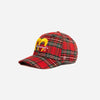
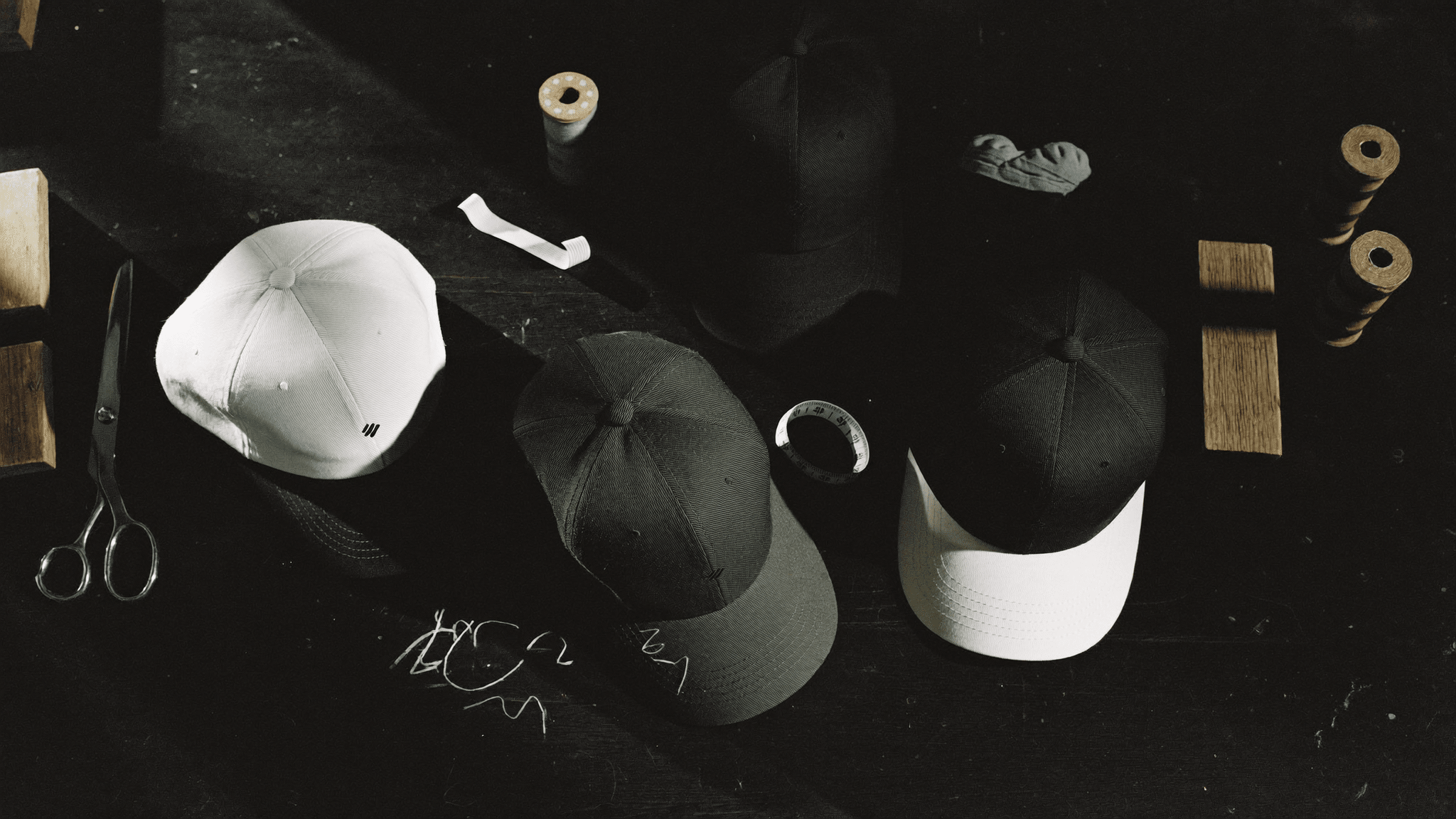
Three of ours below. They are here because this entry is ours, and no other brand on this list gets product photos.


'47
Started in 1947 by Arthur and Henry D'Angelo, Italian immigrant brothers who worked a pushcart outside Fenway Park. Seventy-plus years later it is a Westwood, Massachusetts operation with licensed headwear and apparel across effectively every American league, and since 2024 it sits under New Era.
The Clean Up and the Franchise gave a lot of people their first properly relaxed cap. That matters more than the industry usually admits.
Mitchell & Ness
Philadelphia, 1904, originally a sporting goods maker. Its second life as the throwback authority reshaped how an entire generation thought about sports apparel, and the headwear rode along with it.
Mitchell & Ness proved that archive is a product category. Every brand doing heritage releases now, ourselves included, is working in a lane it widened.
Ebbets Field Flannels
Seattle, 1988, and one of the few American brands still cutting and sewing caps domestically at meaningful volume. Their catalog of historic ballclub headwear, including extensive Negro Leagues work, is a genuine act of preservation dressed up as a product line.
Nobody makes money the way Ebbets makes money. They do it anyway. Respect.
Stetson
John B. Stetson started making hats in Philadelphia in 1865 and produced what is probably the most recognizable silhouette in American headwear. The brand has changed hands and changed shape many times since, but the pattern language it invented is still in circulation everywhere.
Brixton
Out of Oceanside, California, and built from skate and music culture rather than sport. Brixton is the brand that made brimmed hats, five panels and beanies feel like one coherent wardrobe rather than three separate impulses.
Good fits, honest pricing, no pretending to be older than they are.
FlameKeepers Hat Club
Marc Williamson spent more than twenty years in the hat trade before opening FlameKeepers on West 121st Street, and by his own account had to talk landlords into the lease because nobody believed a hat shop was a business anymore. It is now the room people fly into Harlem to stand in, carrying a curated range alongside its own proprietary line.
We will be straight that this is a shop first and a label second, so putting it on a list of brands is a stretch. We are doing it anyway. Harlem has a deeper relationship with headwear than almost anywhere in America, the house line is real, and somebody who can look at your head and hand you the right block is a disappearing kind of expertise the whole category depends on. The name is well chosen.
Monrowe
Founded by Dani Evans, a model who went and learned millinery rather than licensing her name to someone else's factory, and named in tribute to her grandfather. Structured felt, jazz-era shapes from the 1940s and 50s crossed with western silhouettes, made in the United States, which is a decision that costs money every single season.
Of everything on this list, Monrowe is the closest in spirit to what Goorin does, arrived at from a completely different direction and about a century later. Design-led, no shortcuts on construction, and a clear point of view about who the hat is for.
Melin
The clearest recent argument that a cap can be a considered object. Water-resistant builds, hydrophobic treatments, real internal engineering, priced accordingly. You do not have to agree with the price to acknowledge that Melin dragged the category's expectations up.
The honest closing note
Two of the eleven brands here are now under the same roof, which tells you where American licensed headwear is heading. The independents on this list matter more every year, not less.
If you think we ranked ourselves too high, tell us. If you think we ranked ourselves too low, we will not argue.
The Dungeon
-
Posted in
Headwear, Industry, The Forwards